
Extreme Poverty
Over 800 million people live on less than $3 a day, commonly suffering from malnutrition and dying from preventable diseases.
Our goals, how we divide work, and our next steps.
The Alliance aims to facilitate large-scale coordination over the Internet. We are focused on four global crises: extreme poverty, environmental destruction, democratic decline, and dangerous technological development.
Reliability is key to our strategy. Every week, committed members participate in collective actions that advance our shared goals. Since we can count on members, we can plan each action with precision and predict whether it will succeed.
We are in an experimental, invite-only stage. Eventually, we hope to unite millions of people behind an expert-guided, democratically approved plan that strategically mobilizes our collective economic, political, and social resources.
The Alliance is composed of:
We built an online platform (web and mobile apps) that members use to complete tasks.
We depend on members reliably completing the tasks they are assigned. Since we know exactly how many people will participate in an action, we can plan precise and effective actions. For example, we can:
New members sign a membership contract that sets a clear expectation of reliability. Once they sign a contract, we start to assign them tasks. If a member does not complete the tasks they are assigned, we automatically suspend their contract and no longer assign them tasks. They can re-sign the contract at any time.
The office plans projects to advance our priorities, and breaks them down into step-by-step tasks that members can complete.
Planning projects is a creative, open-ended process that searches for levers of change which members can pull.
When ideating for and developing a project, we weigh many considerations. For instance:
Examples of projects we have completed:
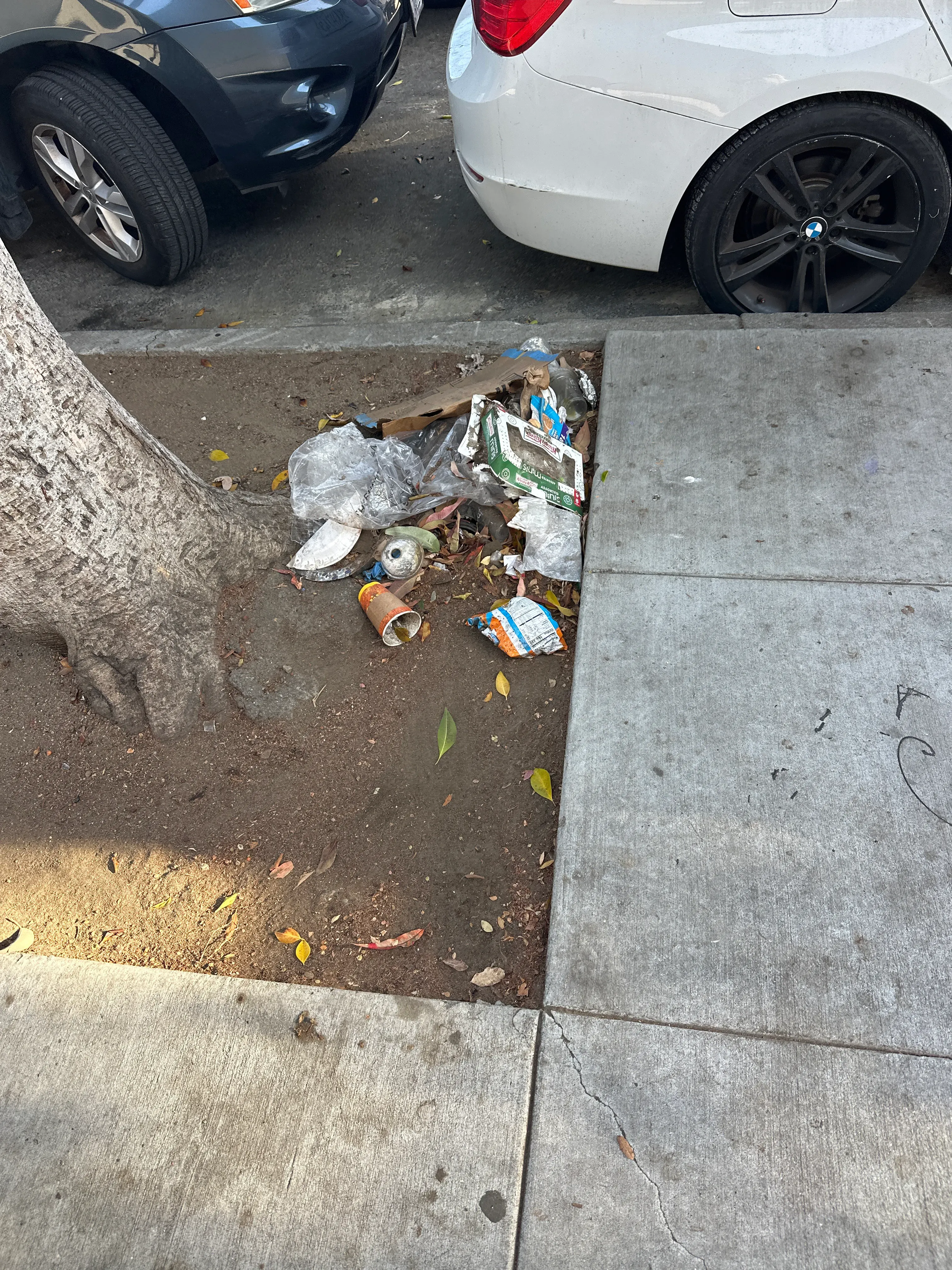
We collected a total of 1,022 pieces of trash
around our communities.
We held a direct discussion between members and anonymous AI researchers
to facilitate common understanding of the risks and harms of AI.
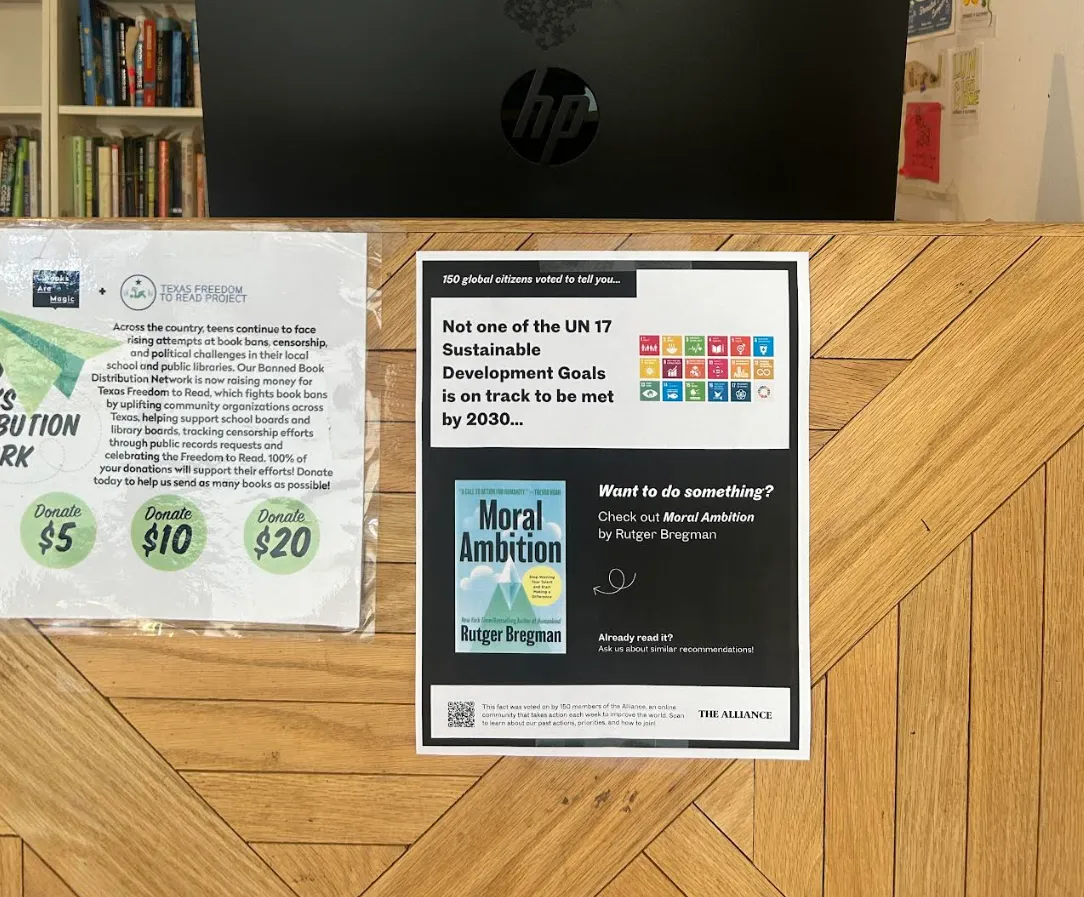
7 libraries around the world put up posters on a fact of our choice
after we voted on facts we wanted more people to know.
Our efforts are focused on four global crises: extreme poverty, environmental destruction, the decline of democratic institutions, and dangerous technological development.
By restricting our focus to problems that are widely recognized as urgent, we believe we can build a broad coalition with clear, shared goals.
These crises represent egregious violations of our foundational moral principle: that we should not treat others in ways that we do not want to be treated. They cause, or have the potential to cause, enormous harm to billions of people.
In addition, these crises are amenable to coordinated action by individuals, because they are the complex result of decisions made by billions of people over time. If we can strategically channel trillions of dollars, billions of hours of work, and millions of voices, we can make rapid and enormous progress.
Over 800 million people live on less than $3 a day, commonly suffering from malnutrition and dying from preventable diseases.

The overuse of land for development and agriculture, overexploitation of natural resources, climate change, pollution, and invasive species are driving a mass extinction in nature.

More countries are losing democratic qualities than at any time since the 1940s, and measures of global freedom have fallen for 19 straight years.

Biotechnology is lowering the barrier to engineering deadly pathogens, and experts warn that artificial intelligence poses a risk of human extinction.
Right now, we are running small-scale actions with the primary goal of learning, not direct impact. We are focused on building internal processes and structures that we can trust to scale smoothly, including the way we develop and evaluate actions. We expect this phase to last for at least another 6 months.
Once we are confident in our processes and structures, we will launch publicly. After this point, we will shift our focus to growth and impact.
As the Alliance grows, we plan to bring together experts from diverse fields to make increasingly impactful, long-term plans. Our online platform will enable direct communication between these experts and millions of members to enact rapid, large-scale change.
It is difficult to know exactly which projects we will undertake as we grow. However, a few broad categories of projects include:
Economic shifts
Pooled funding
Social pressure
Direct action

